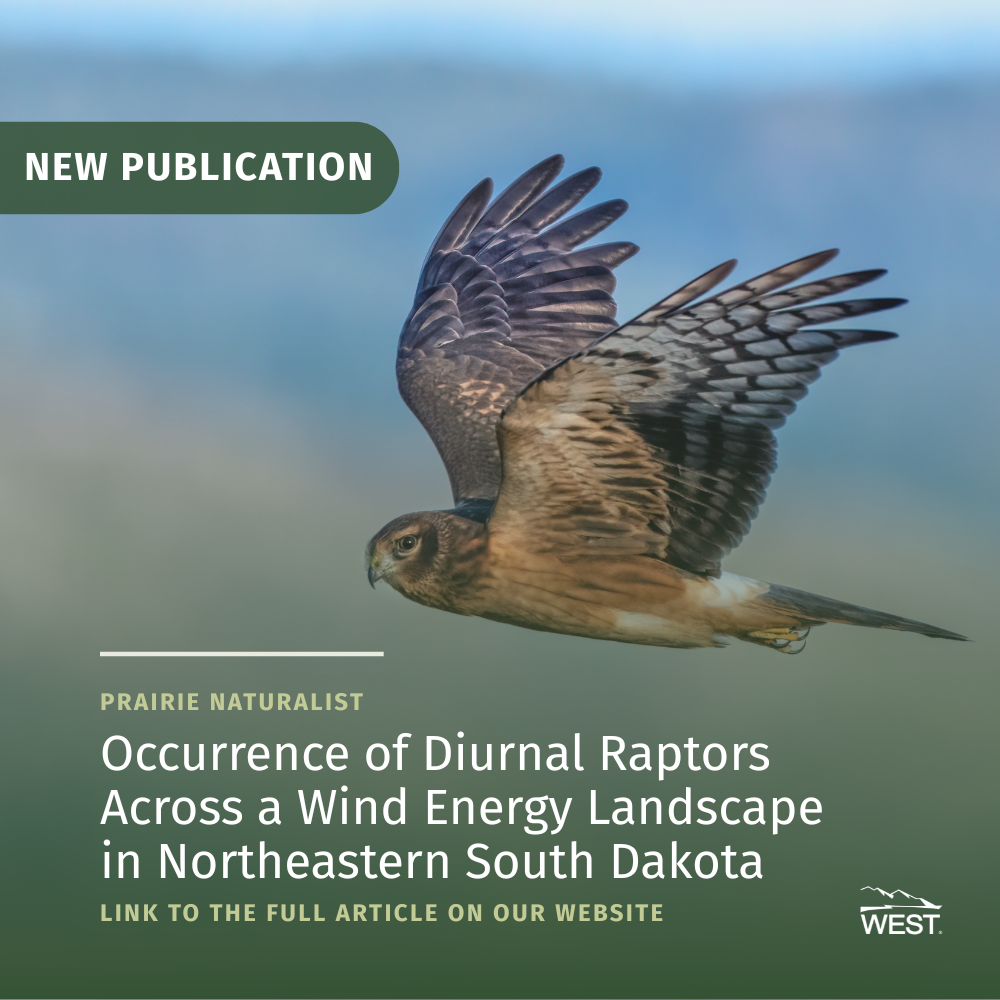
WEST’s Consulting Biologist Carly Kelly and Senior Biologist Chad LeBeau are co-authors on the recently published research article, “Occurrence of Diurnal Raptors across a Wind Energy Landscape in Northeastern South Dakota”, published in the Prairie Naturalist.
This research evaluated raptor occurrence across two adjoining wind energy facilities in northeastern South Dakota over nearly three years. Through monthly surveys, we documented over 700 individual raptors representing 12 species and examined how both landscape characteristics and wind energy infrastructure influenced where these raptors were observed.
The study found that although overall raptor occurrence declined during the monitoring period, the decline could not be linked to the presence of wind energy infrastructure. Instead, raptor occurrence was more strongly associated with habitat features, particularly the abundance of grasslands, as well as wetlands and other water resources within the landscape. Spatial modeling predicted the highest raptor occurrence in areas with greater concentrations of these habitat types, highlighting the importance of landscape context when evaluating wildlife use of wind energy facilities.
These findings contribute to a growing understanding of how raptors use grassland ecosystems with renewable energy development and these findings underscore the value of continued research and monitoring to better understand potential impacts on raptor populations.
Read the full publication here: www.eaglehill.us/prnaonline/access-pages/PRNA-58/054-Kelly-accesspage.shtml