Last month, WEST experts presented at the Solar Wildlife & Ecosystems Research Meeting (SWERM), organized by the Renewable Energy Wildlife Institute (REWI). This conference brought together experts from academia, industry, conservation organizations, and public agencies to advance understanding of ecological interactions in the growing solar sector. This event provided an invaluable opportunity to share insights and learn from cutting-edge research.
Here’s a detailed recap of our sessions:
Pollinator Habitat in Solar Facilities Has Potential to Support High Diversity of Bee Species
Presented by Bethanne Bruninga-Socolar
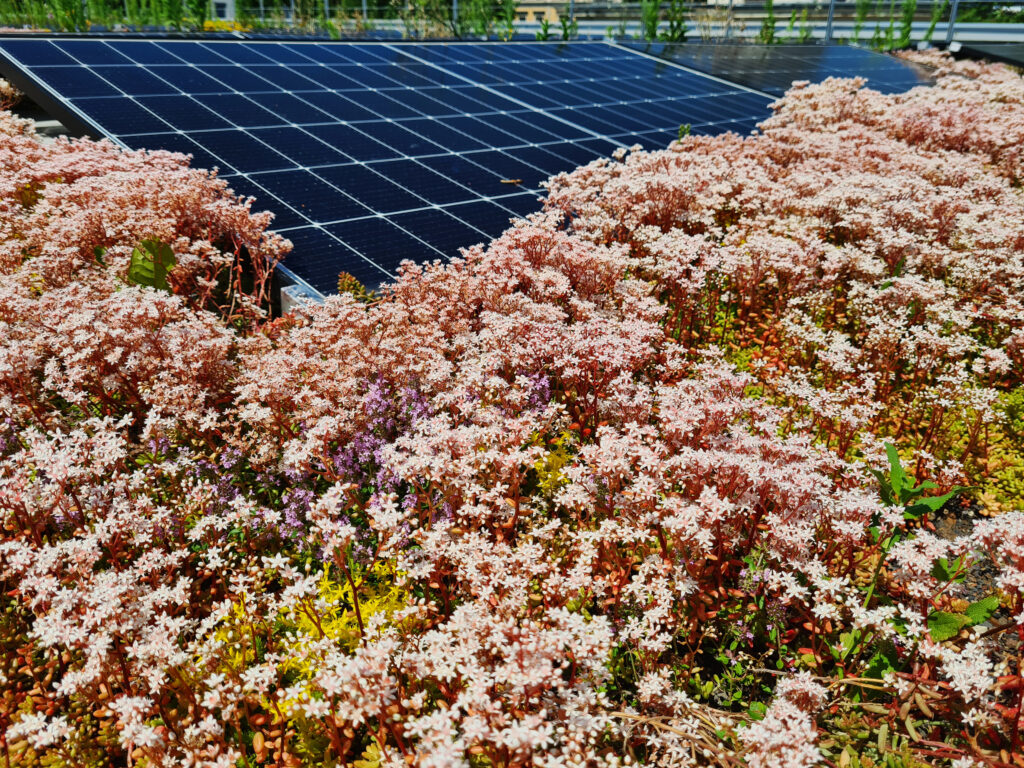
As interest in pollinator-friendly solar projects grows, driven by federal, state, and local initiatives, it is critical for solar developers and operators to understand best management practices (BMPs) for creating and maintaining pollinator habitats. Bethanne was part of a panel of industry experts, restoration consultants, and researchers who reviewed and discussed current strategies and emerging research across all phases of solar development—from design and permitting to construction and operations. The panel highlighted successful practices, key trade-offs, and knowledge gaps to help guide future BMPs development and support the expansion of pollinator-friendly solar facilities.
Definitions of Success: Discussions on Agrivoltaics and Ecovoltaics Definitions
Workshop co-facilitated by Bethanne Bruninga-Socolar | Lead facilitator: Jordan Martin (National Lab of the Rockies)
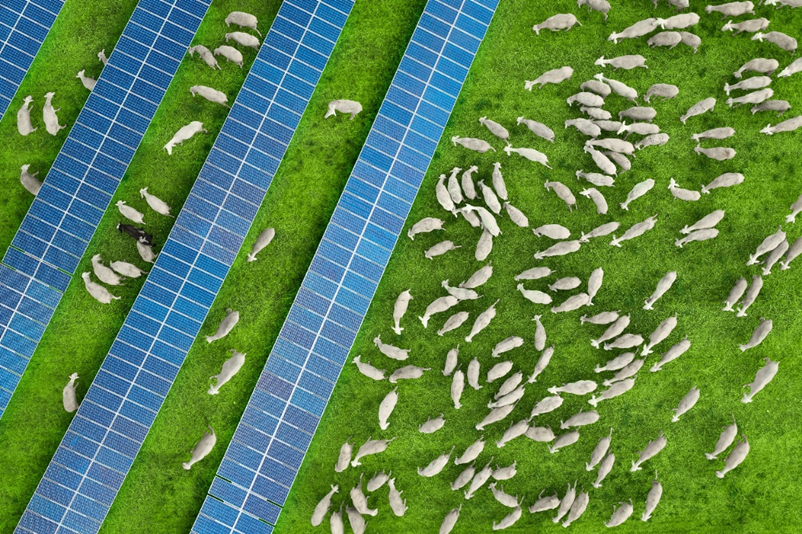
Researchers, policymakers, non-governmental organizations, and industry associations in the US and internationally are actively working to establish clear definitions for agrivoltaics and ecovoltaics. While these definitions sometimes overlap, they also diverge on what falls within or outside the scope of each term. This workshop convened a diverse group of stakeholders to examine the merits and challenges of existing approaches and to identify next steps for advancing these ongoing efforts.
Time for Reflection: Contextualizing Avian Fatality Monitoring Data at Utility-scale Photovoltaic Solar Facilities in the US and Canada
Presented by Daniel Riser-Espinoza
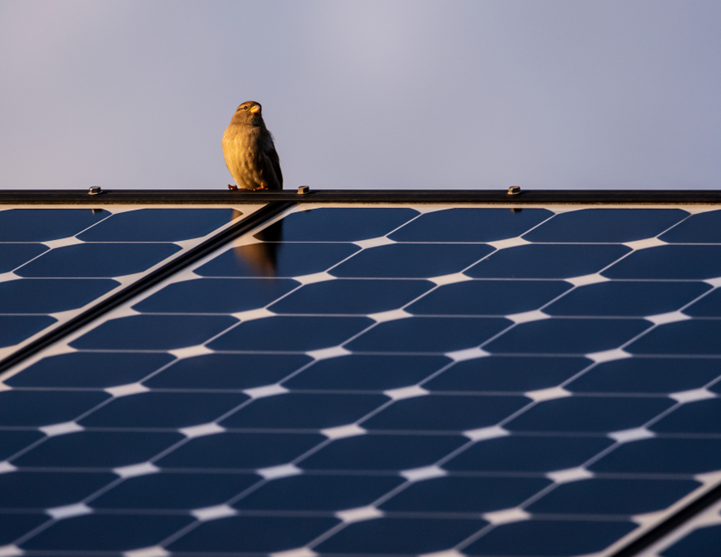
Avian-solar interactions have been studied for over a decade, with substantial findings published in peer-reviewed and gray literature; however, the perception of impacts to birds from solar lags behind emerging science. Daniel’s presentation synthesized the progression of research on avian mortality at photovoltaic (PV) solar facilities, distinguishing well-understood patterns from areas of uncertainty. Key considerations included the influence of technology type on collision risk, current mortality trends across North America, and overlooked factors shaping impact assessments. Finally, this presentation explored the trajectory of ongoing research and its implications for future monitoring effort at PV solar facilities.
Siting a Solar Project in the Endangered Ord’s Kangaroo Rat Range in Alberta, Canada
Poster by Josh Sullivan
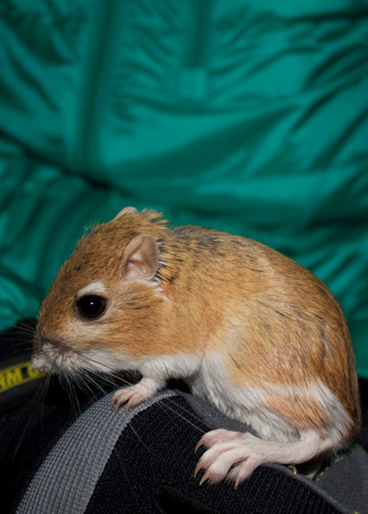
Ord’s kangaroo rats are nocturnal, fossorial rodents found at the northern limit of their range in Canada, where they are federally listed as Endangered. Ord’s kangaroo rats occupy a distinct and geographically isolated range within Southeastern Alberta that offers high photovoltaic potential. Based on their Endangered status, Alberta’s Solar Directive stipulates that solar infrastructure must not be sited within 250 metres of an Ord’s kangaroo rat burrow. Based on this, and the presence of Ord’s kangaroo rat burrows in areas suitable for solar development, siting a solar project can pose a serious challenge. Josh’s poster presented a case study illustrating regulatory constraints, species-specific habitat considerations, and lessons learned for permitting a utility-scale solar project in the range of an endangered fossorial mammal.
View Josh’s complete poster here.
Optimizing Dual-use Solar to Increase Ecosystem Services (Ecovoltaics): Benefits and Best Management Practices
Poster co-authored by Bethanne Bruninga-Socolar | Lead author: Lee Walston (Argonne National Lab)
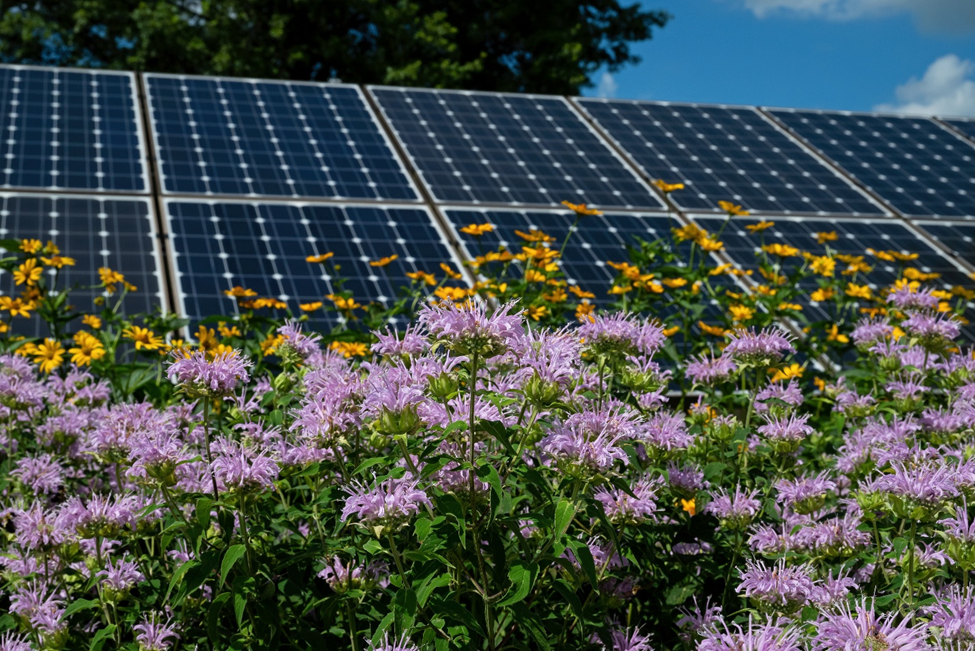
Dual-use solar energy systems—referred to as ecovoltaics—integrate photovoltaic power generation with ecological enhancements to deliver multiple ecosystem services. These designs employ strategic vegetation management at solar installations to improve biodiversity, soil health, and agricultural productivity while creating habitats for pollinators and wildlife. By intentionally incorporating habitat-focused principles, ecovoltaic systems aim to optimize land use efficiency and ecological resilience. Since their inception, this approach has experienced rapid adoption and diversification, driving research initiatives and demonstration projects to establish science-based best management practices that maximize habitat value and sustainability within solar facilities.
View the complete poster here.
Big Game and Solar Development – Current Challenges, New Insights, and Emerging Guidance
Presented by Hall Sawyer
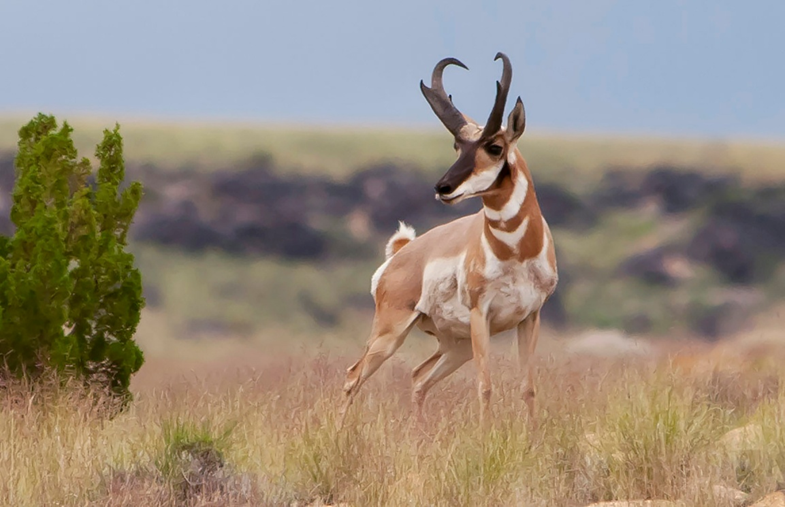
Hall’s presentation described how utility-scale solar development in western rangelands presents significant challenges for big game species, whose survival depends on movement and connected landscapes. While policies have driven major investments in habitat and migration corridor protection, solar infrastructure—especially fencing—can fragment habitats, restrict animal movements, and lead to both direct and indirect habitat loss. Recent studies using Global Positioning System data have documented declines in big game use near solar facilities, highlighting the need for design-based mitigation strategies such as movement corridors, roadway offsets, and adaptive fencing to maintain connectivity. Additional measures like vegetation enhancement and water source access can further support wildlife, but implementation is complex and must be tailored to local conditions. Effective guidance, flexible for project-specific needs and informed by standardized post-construction data, is essential for balancing renewable energy goals with big game conservation.
Quantifying Greater Sage-grouse Occurrence at a Solar Energy Facility in Wyoming
Presented by Hall Sawyer, Prepared by Carly Kelly
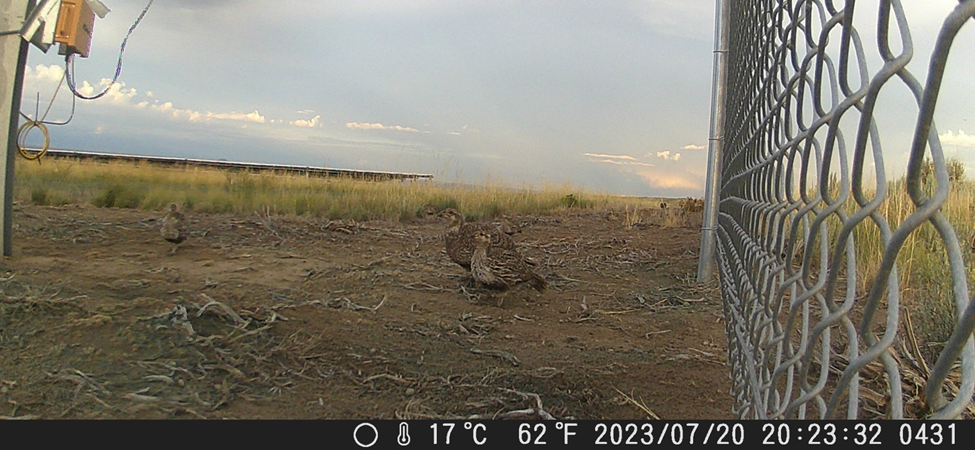
Solar energy development is a relatively new land use, and few studies have assessed wildlife responses to it. To investigate greater sage-grouse use of a solar energy facility, pellet surveys, camera traps, and vegetation sampling were conducted to compare sage-grouse occurrence and habitat characteristics inside the facility versus the surrounding area. Results showed, five years after construction, sage-grouse continued to utilize the solar facility, with higher pellet occurrence inside the facility during winter, while camera trap detections were similar across seasons. Vegetation surveys revealed greater proportions of grass and forbs inside the facility, which may influence sage-grouse habitat selection. These findings suggest that sage-grouse may select seasonal habitats within solar facilities, but further research is needed to clarify the ecological mechanisms and long-term implications of this behavior.
Fact or Fiction: Untangling the Scientific Support for Mitigation and Monitoring Measures at Solar Energy Facilities
Co-authored by Daniel Riser-Espinoza | Primary author: Karl Kosciuch, Tetra Tech
Scientific literature plays a key role in guiding impact assessments, mitigation, and monitoring for solar energy projects. However, photovoltaic development has advanced faster than wildlife research, leading to reliance on a few limited studies, mostly from southern California, to evaluate bird mortality across North America. Current approaches often assume causal mechanisms for bird mortality based on behavioral and sensory ecology, as well as solar technology, but these assumptions lack robust support. Additionally, misinterpretations of the scientific literature can amplify given how frequently it is cited, re-cited, and/or found on-line. This can be made even worse in the age of Artificial Intelligence (AI) where some may increasingly rely on AI tools to summarize complicated and/or not fully understood or well-tested hypotheses. The findings highlight the need to revise interpretations of key references and reveal that justification for some monitoring measures is insufficient, emphasizing the importance of accounting for technological differences when assessing impacts. Moreover, careful review of source material is required when interpreting answers to questions about avian-solar interactions.
Solar Synergy: Assessing Biodiversity Monitoring Protocols at Solar Facilities to Promote Data Standardization
Workshop facilitated by Todd Mattson

The Solar Synergy Workshop brought together experts and practitioners focused on biodiversity monitoring at solar facilities to share knowledge and discuss the methods being used. Breakout groups were used to compile a list of tools and techniques currently employed for monitoring different taxonomic groups. These methods were evaluated for their practicality and scientific rigor. Finally, participants designed monitoring plans for hypothetical facilities with varying restrictions and goals.
At WEST, we’re committed to driving innovation and fostering partnerships that make renewable development smarter and more sustainable. Conferences like SWERM reinforce our dedication to shaping the future of renewable energy through science, collaboration, and practical solutions. We look forward to continuing these conversations and leading the way in responsible energy development.
Reach out to the team to learn more about our work and how we can support your project.