Thermal cameras have been used for decades to answer research questions about how bats interact with wind turbines—but they are no longer just experimental, research-only tools. Improved performance and lower costs now make thermal cameras a practical, affordable way to monitor bat activity at wind turbines, with key advantages over acoustic detectors.
Positioned on the ground about 30 meters from the turbine base, thermal cameras can monitor bat activity from near the nacelle to the bottom of the rotor sweep without turbine integration, using their own solar power. When paired with operational data, thermal imagery shows bat activity while turbines are spinning, providing a practical foundation for designing smart curtailment strategies and measuring their effectiveness.
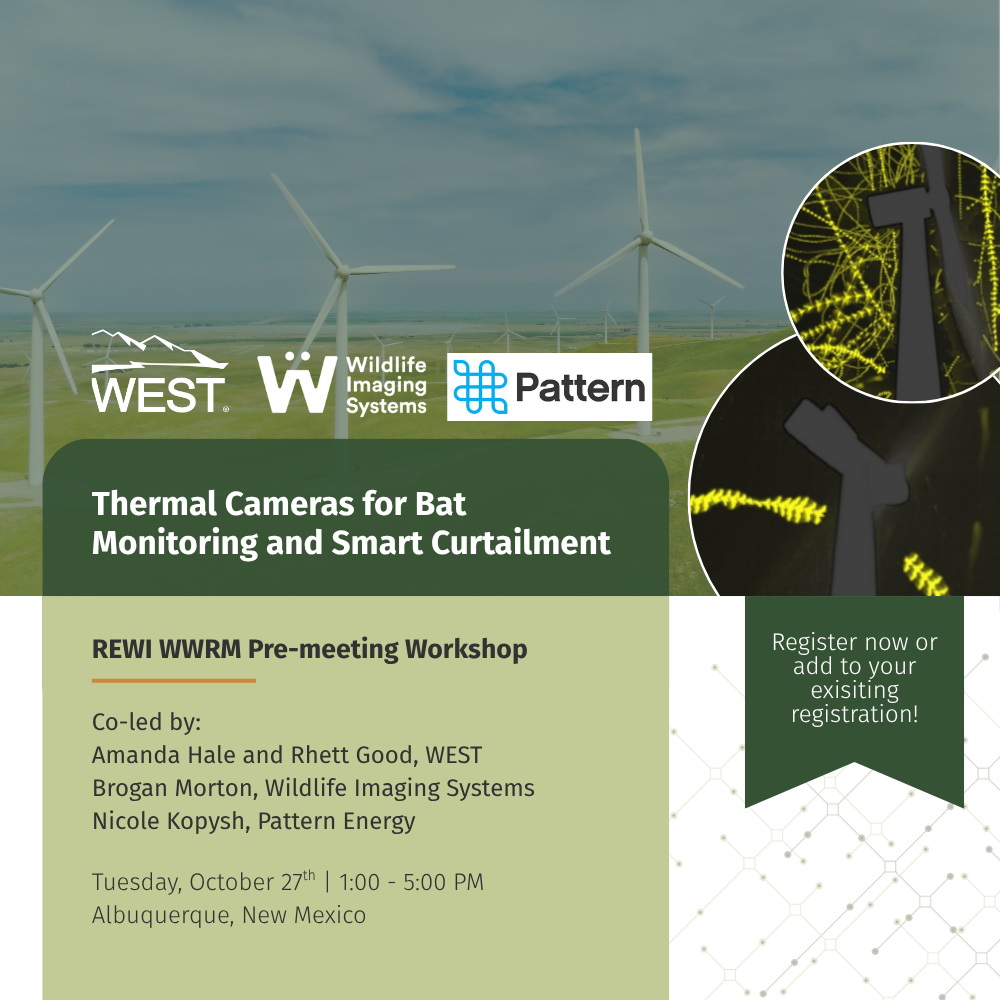
At the Renewable Energy Wildlife Institute (REWI) WWRM, WEST, Wildlife Imaging Systems (WIS), and Pattern Energy are co-leading a hands-on, pre-meeting workshop on integrating thermal cameras into everyday operations. Drawing on five years of field deployments, we’ll compare thermal and acoustic monitoring, examine what the data reveal about bat activity and fatalities, and share recommended workflows for data collection and analysis. This workshop will also include a live camera setup demonstration. Nicole Kopysh of Pattern Energy will offer an operator’s perspective on the practicalities of deploying thermal cameras and using thermal data to better understand and manage bat risk.
We especially encourage wind energy operators and agency staff to join the conversation. Your feedback will help shape an agency-accepted protocol for using thermal cameras in operational settings.
Tuesday, October 27, 2026
1:00–5:00 PM
Get registered here: https://rewi.org/news-events/wwrm/wwrm-registration/