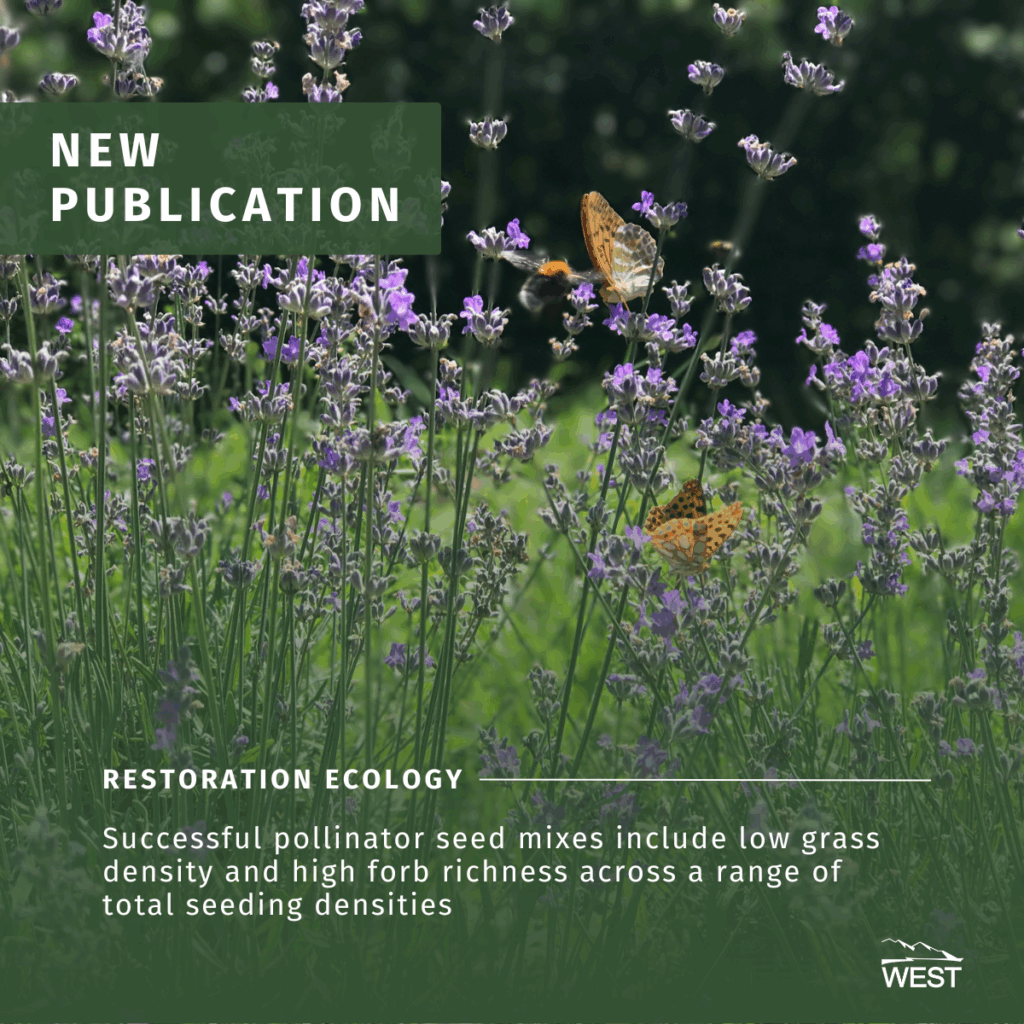
WEST Consulting Biologist Bethanne Bruninga-Socolar, PhD is a co-author of the recently published research article, “Successful pollinator seed mixes include low grass density and high forb richness across a range of total seeding densities,” published in Restoration Ecology, The Journal of the Society for Ecological Restoration. Restoring pollinator habitats by planting wildflowers helps combat pollinator declines. While these plantings benefit pollinators, there’s little research on how different seed mix designs impact floral resources over time. This study tested how seed density, diversity, and flower-to-grass ratios affect bloom coverage across two U.S. regions. Results showed that beyond a certain seed density, adding more seeds didn’t increase flower quantity or bloom duration as long as flower diversity was maintained.
Click here to read more: Successful pollinator seed mixes include low grass density and high forb richness across a range of total seeding densities – Müller – Restoration Ecology – Wiley Online Library